

terraform
Terraform Modules for AWS: A Practical Guide for .NET Developers
Learn a simple, repeatable way to structure and build Terraform modules on AWS so your .NET services stay consistent, secure, and easy to reuse.
14 min read
Showing 13-24 of 58 articles
Learn a simple, repeatable way to structure and build Terraform modules on AWS so your .NET services stay consistent, secure, and easy to reuse.

In this hands-on guide, we'll use .NET Aspire 13, DynamoDB Local, and .NET 10 minimal APIs to build a full CRUD Web API against DynamoDB - without ever touching an AWS account. Then we'll see how to flip a small configuration switch to point the same code to real DynamoDB in AWS.
In this hands-on guide, we will use .NET Aspire 13 and the latest .NET 10 SDK to build a cloud-ready notifications system that talks to real AWS services like DynamoDB, SNS, and SQS, while keeping the entire local development experience orchestrated from a single Aspire app host.
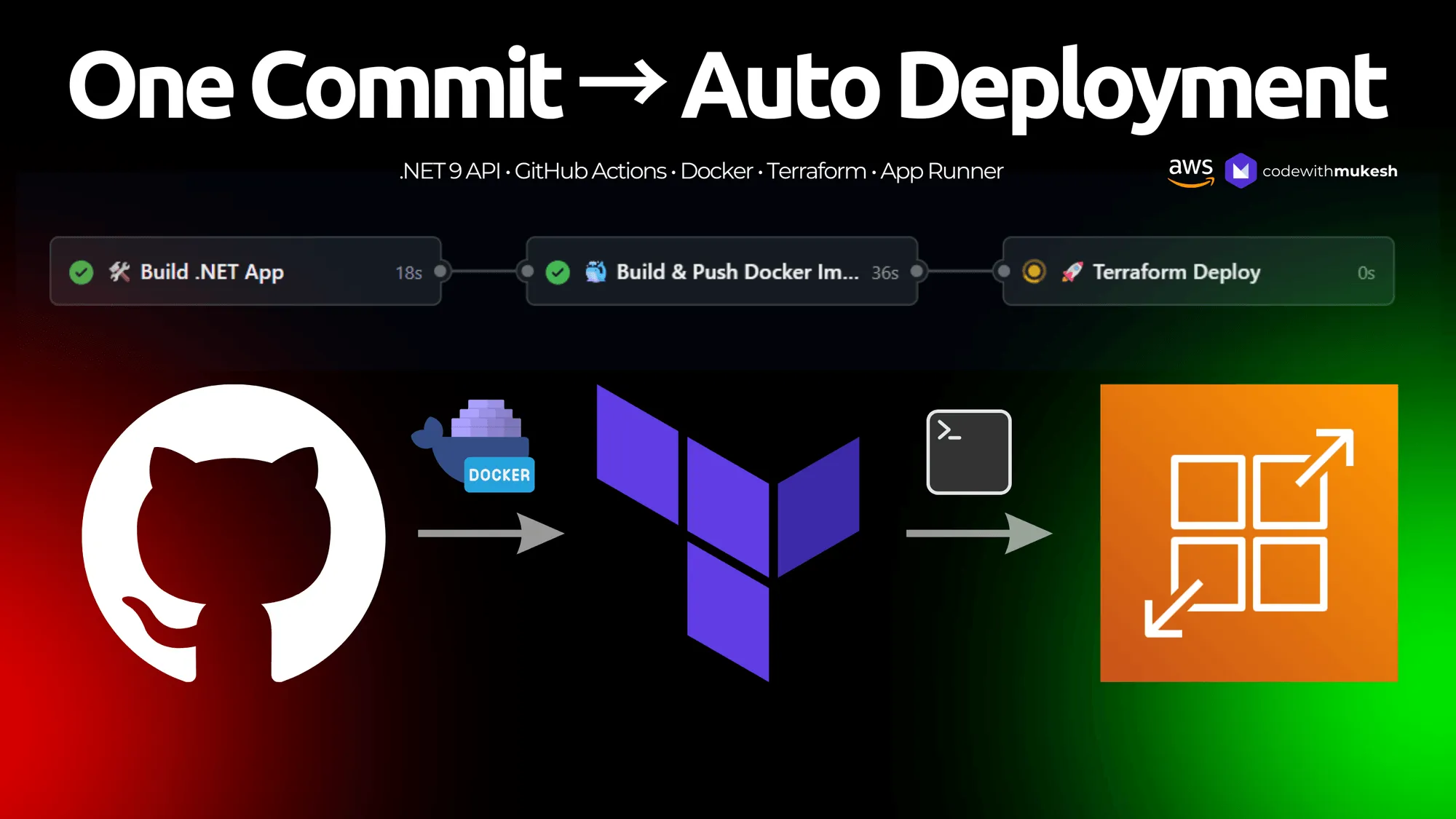
Learn how to automate the deployment of your .NET applications to AWS App Runner using Terraform. This guide covers infrastructure-as-code setup, CI/CD integration, and practical tips to streamline your cloud deployments.

Learn how to extract text from PDF documents using AWS Textract and .NET-based AWS Lambda functions. This guide walks .NET developers through building a serverless OCR pipeline using S3 triggers, Textract integration, and real-world implementation tips for handling document processing in the cloud.

Learn how to efficiently upload large files in ASP.NET Core using Amazon S3's multipart upload feature and pre-signed URLs. This hands-on guide walks you through building a scalable, client-driven upload workflow using a .NET 9 Web API and a Blazor WebAssembly frontend. You'll learn how to generate pre-signed URLs, handle file chunking, perform parallel uploads, and finalize the upload with minimal server load. Ideal for developers looking to offload file handling to S3 while maintaining full control from a .NET-based stack.
Learn how to build scalable, fault-tolerant serverless workflows using AWS Step Functions and .NET Lambda functions. This guide is tailored for .NET developers who want to move beyond simple Lambda functions and orchestrate complex workflows with retries, parallel executions, and state management. We’ll cover the basics of Step Functions, how they integrate with .NET Lambda projects, real-world architecture examples, setup instructions, error handling, and when to avoid using them.

Learn how to build a fully serverless, production-ready image processing pipeline on AWS using .NET. This guide walks through uploading images via a minimal .NET 9 Web API, triggering S3 event notifications to an SQS queue, and processing those events in a Lambda function using ImageSharp. You'll learn how to resize images into optimized thumbnails, upload them to an output S3 bucket, and monitor the workflow using CloudWatch. The architecture is event-driven, scalable, and cost-efficient - ideal for modern applications handling user-generated content.
DynamoDB Streams offer a powerful way to capture real-time changes in your DynamoDB tables, enabling event-driven architectures, auditing, replication, and more. In this guide, I will walk you through everything .NET developers need to know to get started with DynamoDB Streams. By the end of this guide, you’ll have a solid foundation for integrating DynamoDB Streams into your .NET applications, unlocking real-time data processing capabilities to enhance your architecture.
Modern distributed systems rely on messaging services like Amazon SQS and SNS. They help you decouple these interconnected components, ensuring each part works independently yet harmoniously. Whether it’s queuing tasks for reliable processing with SQS or broadcasting real-time notifications to multiple subscribers with SNS, these tools play a pivotal role in simplifying complex workflows.
Learn how to implement Amazon DynamoDB Time to Live (TTL) for efficient data expiration in .NET applications. This guide explains the basics of TTL, showing you how to automatically remove outdated items and optimize database operations. Perfect for developers, this guide ensures you can effectively manage data life cycles with DynamoDB's powerful TTL feature.
Batch operations in Amazon DynamoDB allow developers to efficiently perform multiple read, write, update, and delete actions in a single request, optimizing performance and reducing costs. In this article, we'll explore how to implement batch operations using DynamoDBContext in the AWS .NET SDK. By building a simple .NET web API, you'll gain hands-on experience working with DynamoDB batch operations in a practical context.